Citi Inclusive Design
CITI | 2020-2021 | INCLUSIVE DESIGN | ORGANIZATIONAL CHANGE
Inclusive design isn't a feature. It's how a mature design organization operates.
MY ROLE
Lead strategist & inclusive design track lead
DURATION
9 months
PARTICIPANTS
50+ stakeholder interviews
METHODS
Participatory research, pilot design, concept testing, org design
Citi wanted more structure and formality to inclusive design within their North American design team. What began as a simple effort to enhance their practices evolved into a significant shift in the organization's view of design maturity. They began to focus more on serving underserved customers and establishing design as a key driver of business success.
The impact
Multiple client stakeholders were promoted over the course of and following the engagement; a signal of the organizational visibility and credibility the work created
Work had visibility all the way to CEO Jane Fraser, elevating design's role as a strategic partner to product and business teams
Established an expanded definition of inclusive design for Citi Design NA, reframing it from an accessibility checkbox to a tenet of design maturity
Delivered a resource library, office hours program, inclusive design style guide, and an action plan that provided tools to sustain the work independently
Ran a pilot project designing a debit card for traditionally underserved audiences, to test the inclusive design model in practice, not just in theory
The Story
We were tasked with helping Citi's North American design team adopt a more organized approach to inclusive design. Before jumping into solutions, though, we first needed to grasp the team's perspective on what inclusive design truly meant and identify any obstacles they faced in applying it.
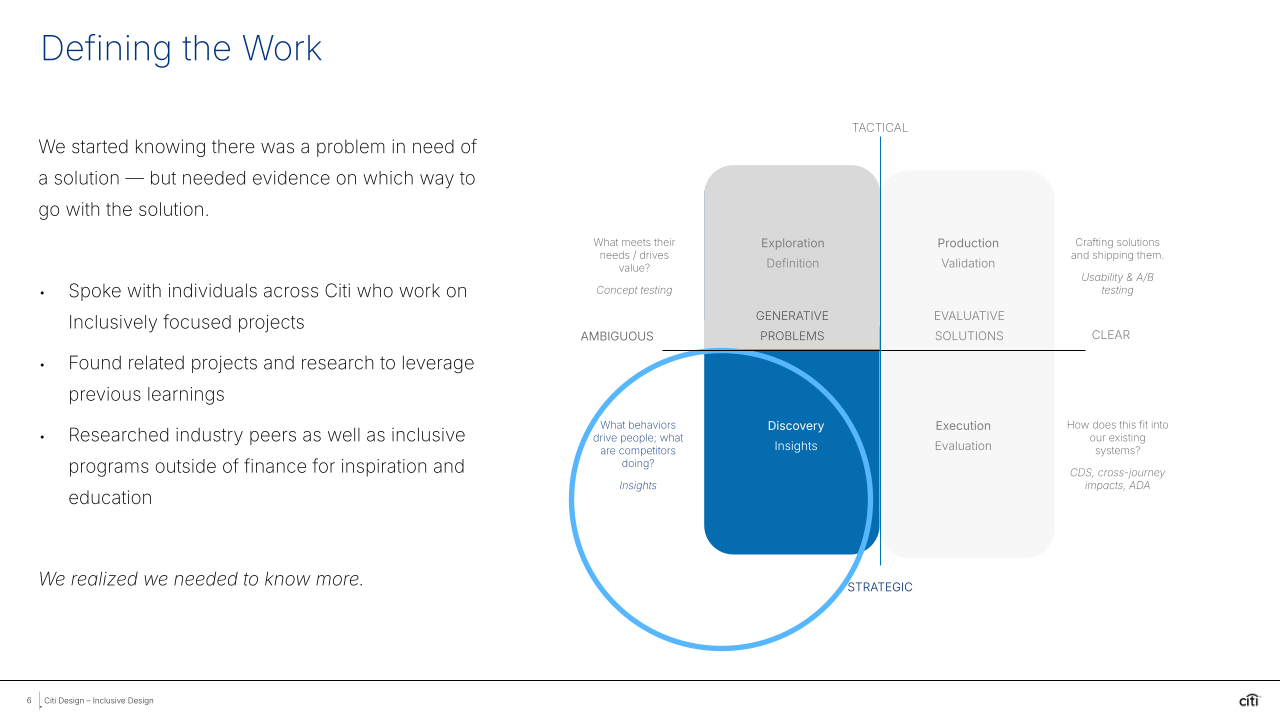
Defineing the work by starting with discovery research
We spoke with over 50 people across Citi: designers, product managers, business leads, DEI specialists, and technologists.
What we heard was consistent. Inclusive design was conflated with accessibility and universal design, making it feel like a compliance exercise rather than a strategic one.
The opportunity wasn't to teach new skills. It was to change a mindset.
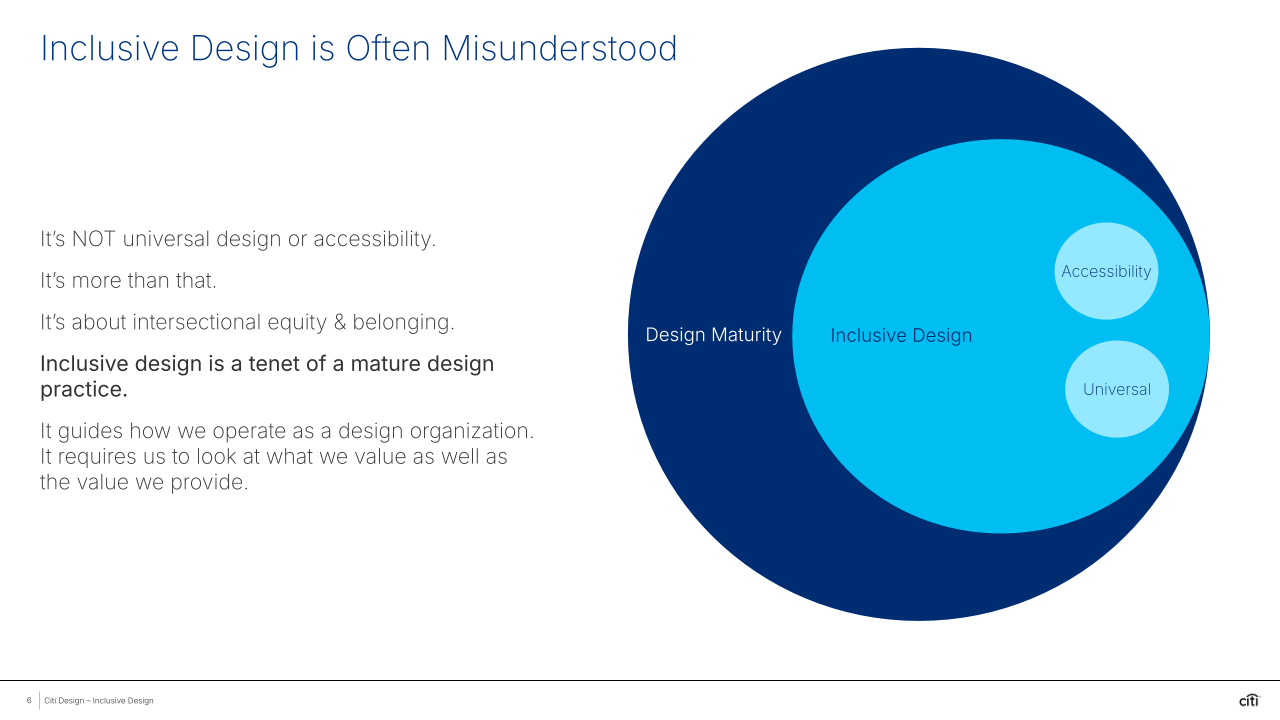
Visual showing how inclusive design is a tenet of a mature design practice
I led the development of a new inclusive design model for Citi — a guiding visual that reframed inclusive design as a property of organizational maturity rather than a feature of individual products.
We used the COM-B behavioral model to identify the mindset and method changes needed, then designed a phased action plan that progressed from quick wins to long-term structural change.
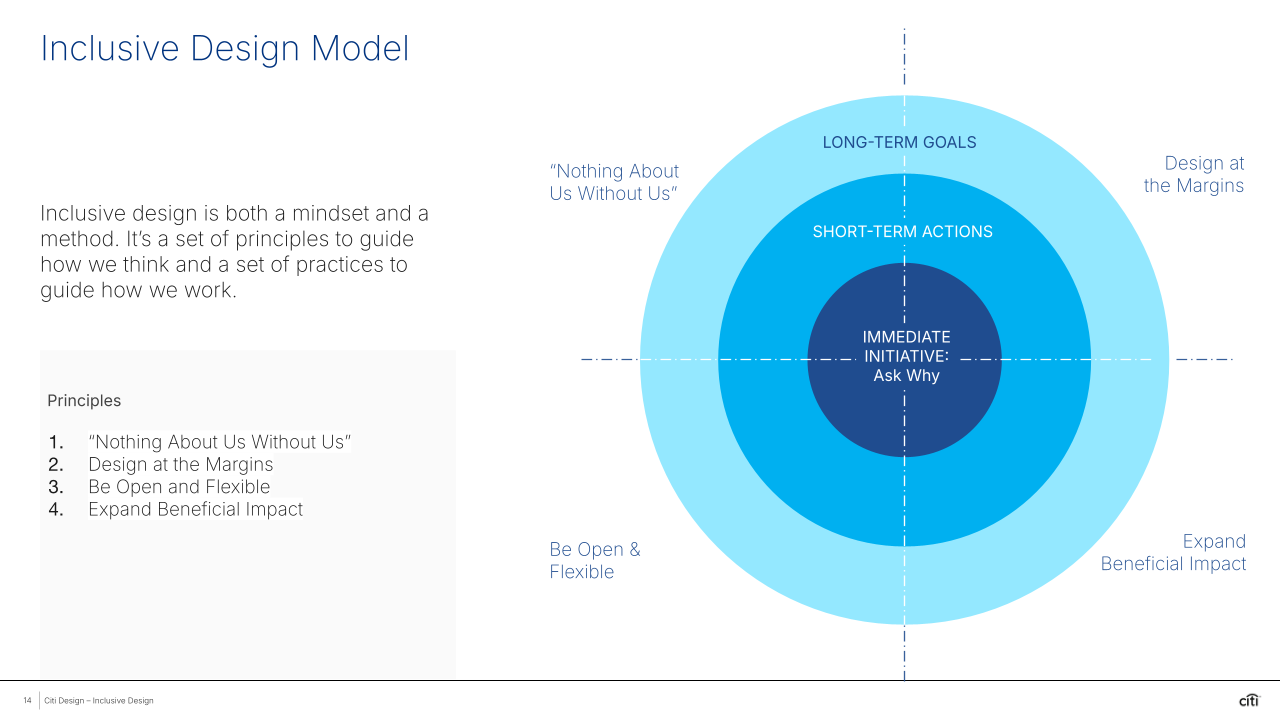
Inclusive Design Model: a mindset and a method
To test the model in practice, we ran a pilot project with 10 Citi designers working on a debit card for historically underserved customers.
We conducted participatory research with those customers, synthesized findings as a team, ran an ideation sprint, and concept-tested three directions.
The pilot gave the design team firsthand experience of what inclusive design actually feels like — and built the confidence to keep doing it.
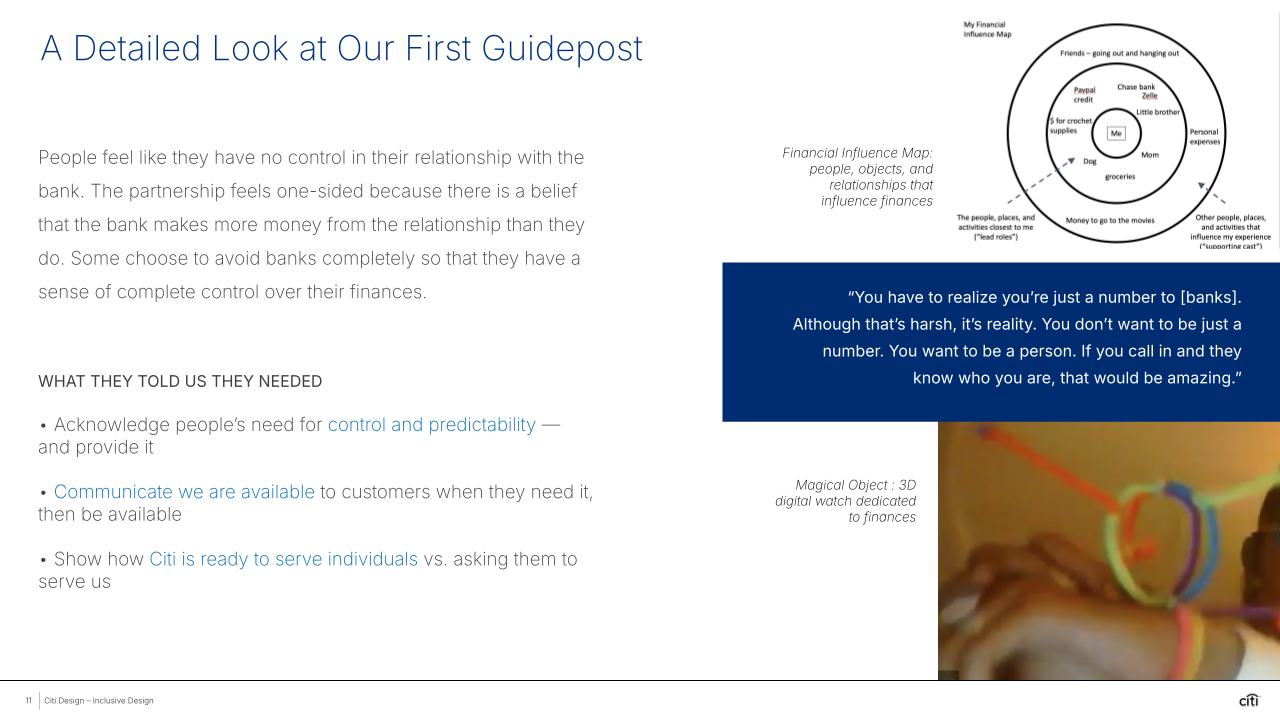
Pilot project testing results