Humana COVID-19 Initiative
HUMANA | 2020 | SERVICE DESIGN | FUTURE OF WORK STRATEGY
We didn't just plan a safe return.
We redesigned how a company works.
MY ROLE
Lead service designer
DURATION
7 months
TEAM
4 designers
METHODS
Service blueprinting, research, futures thinking
Humana brought us in to help employees return to the office safely during COVID-19. Six months in, we saw a bigger opportunity and proposed an entirely new scope. Instead of planning a return, we designed for the future.
The impact
$1M+ in budget allocated to implement the strategy, with an HR leader promoted to lead the effort and changes made to physical office spaces
Humana created a new employee designation type for hybrid workers based on the task-based segmentation model we designed
Humana hired us again in 2021 for a $300K follow-on engagement
Shifted the company's framing from return to work to future of work — a reframe that changed the scope, the investment, and the outcome
The Story
Initially, our main focus was logistics: figuring out how to safely bring employees back to work. We conducted research with both knowledge workers and essential staff who work shifts. This helped us understand the coordination needed both in the spotlight and behind the scenes. We then put together service blueprints and journey maps to steer the whole process.
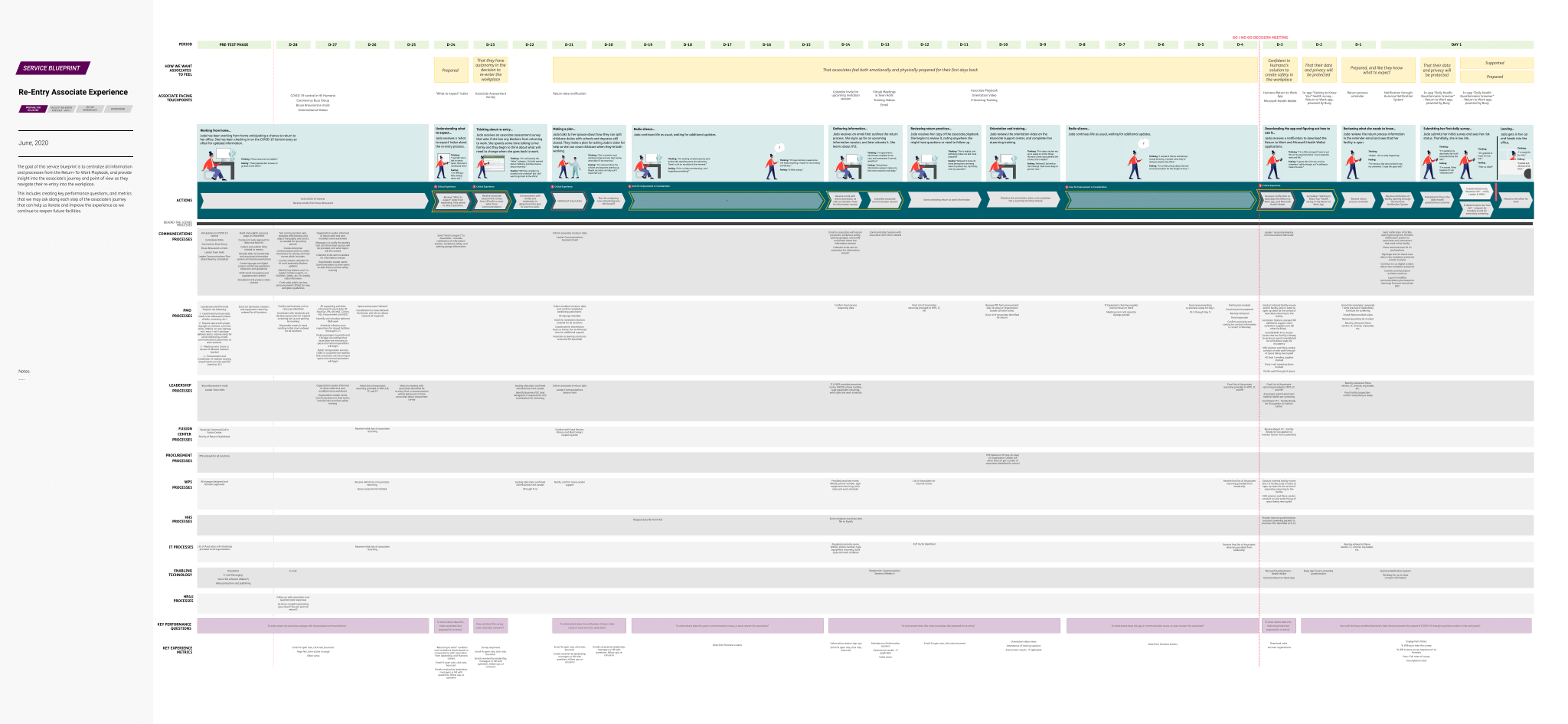
Prepare for employee re-entry service blueprint
As the project progressed, we realized that the main issue wasn't logistics — it was about how the organization was structured. The shift to remote work had revealed some significant gaps in how Humana supported various types of workers. A simple plan to return to the office wasn't going to solve these problems.
So, we decided to change our approach. Instead of focusing on returning, we thought it was better to design what the future could look like. We used the PESTLE framework for our research, conducted workshops, and ran some experiments at Humana's Experience Center. Our goal was to uncover what employees had missed during remote work.
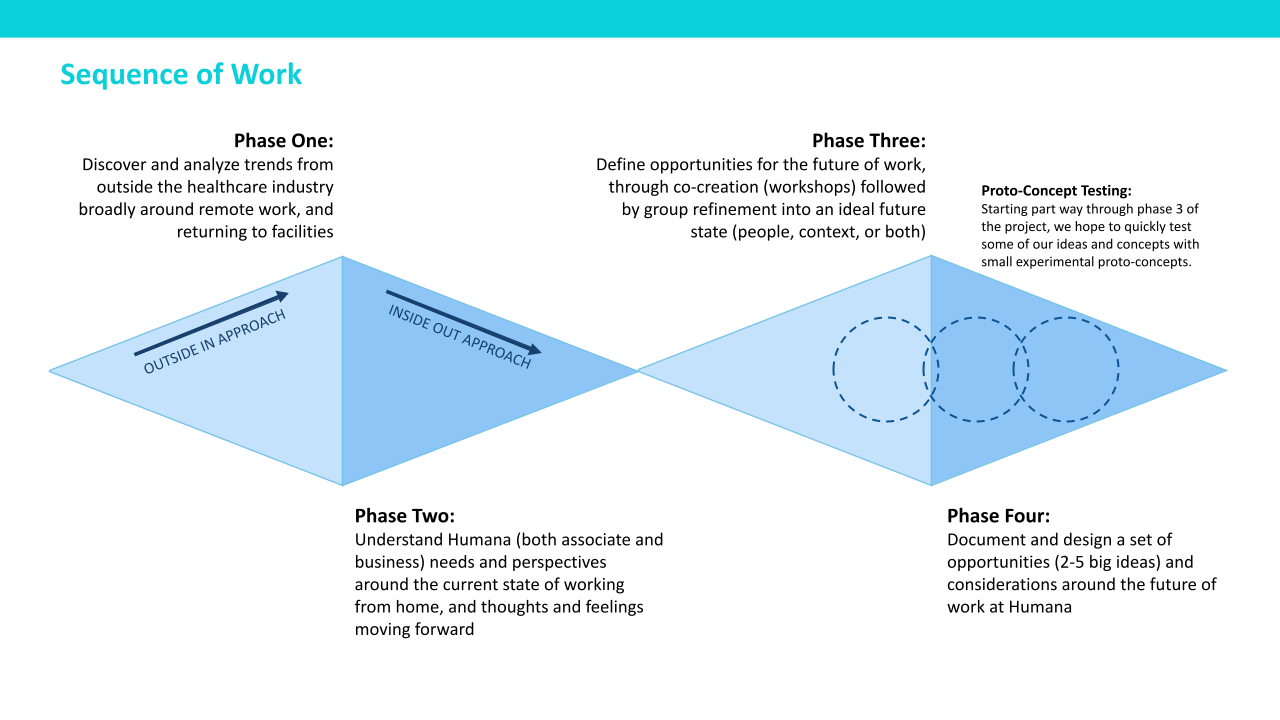
Proposal for new scope: future of work strategy
Together, we came up with a strategy based on three key areas of resilience: social connection, boundaries, and autonomy.
One of the key insights was straightforward yet crucial: while formal communication had adapted to the remote environment, informal communication had faded away. People really missed that.
Our final recommendation was to introduce a task-based segmentation model. This would enable Humana to create personalized hybrid work options rather than applying a one-size-fits-all rule, equipping the company to thrive in what we call the "phigital" future.
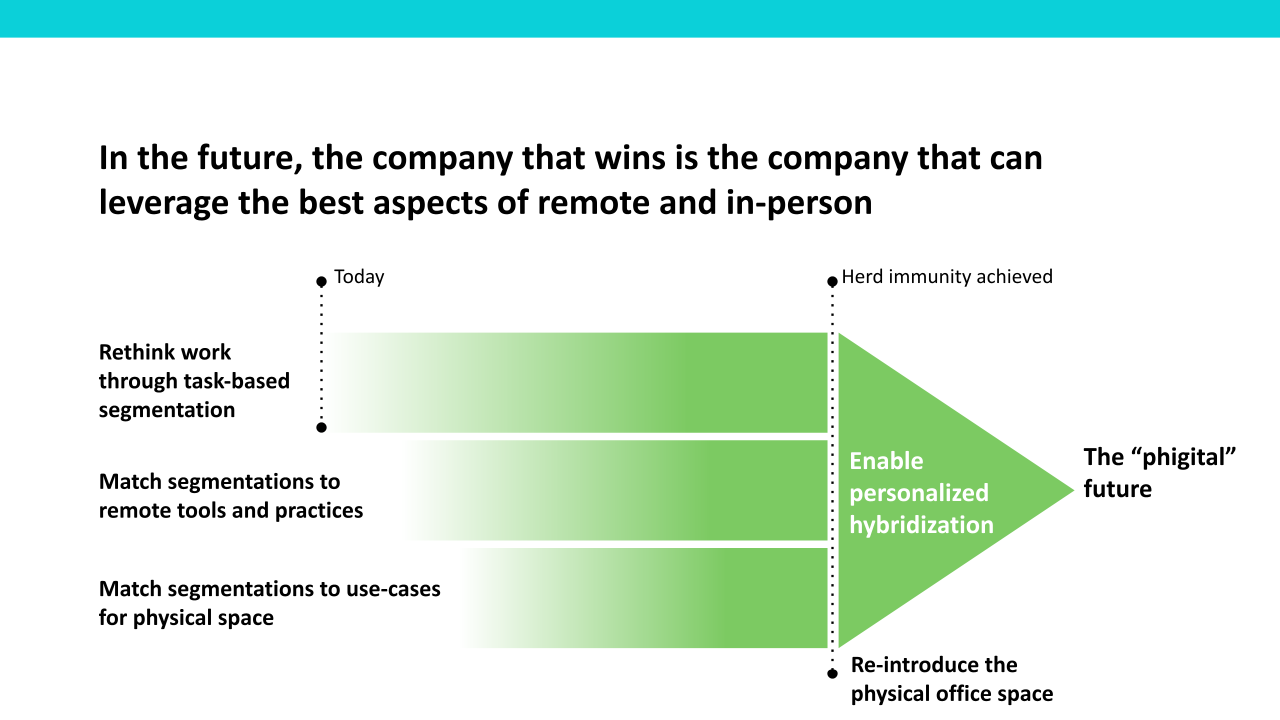
Task-based segmentation model for the future of work at Humana